FASHION HISTORY · HANFU TYPES
Types of Hanfu: Ruqun, Shenyi and Historical Context
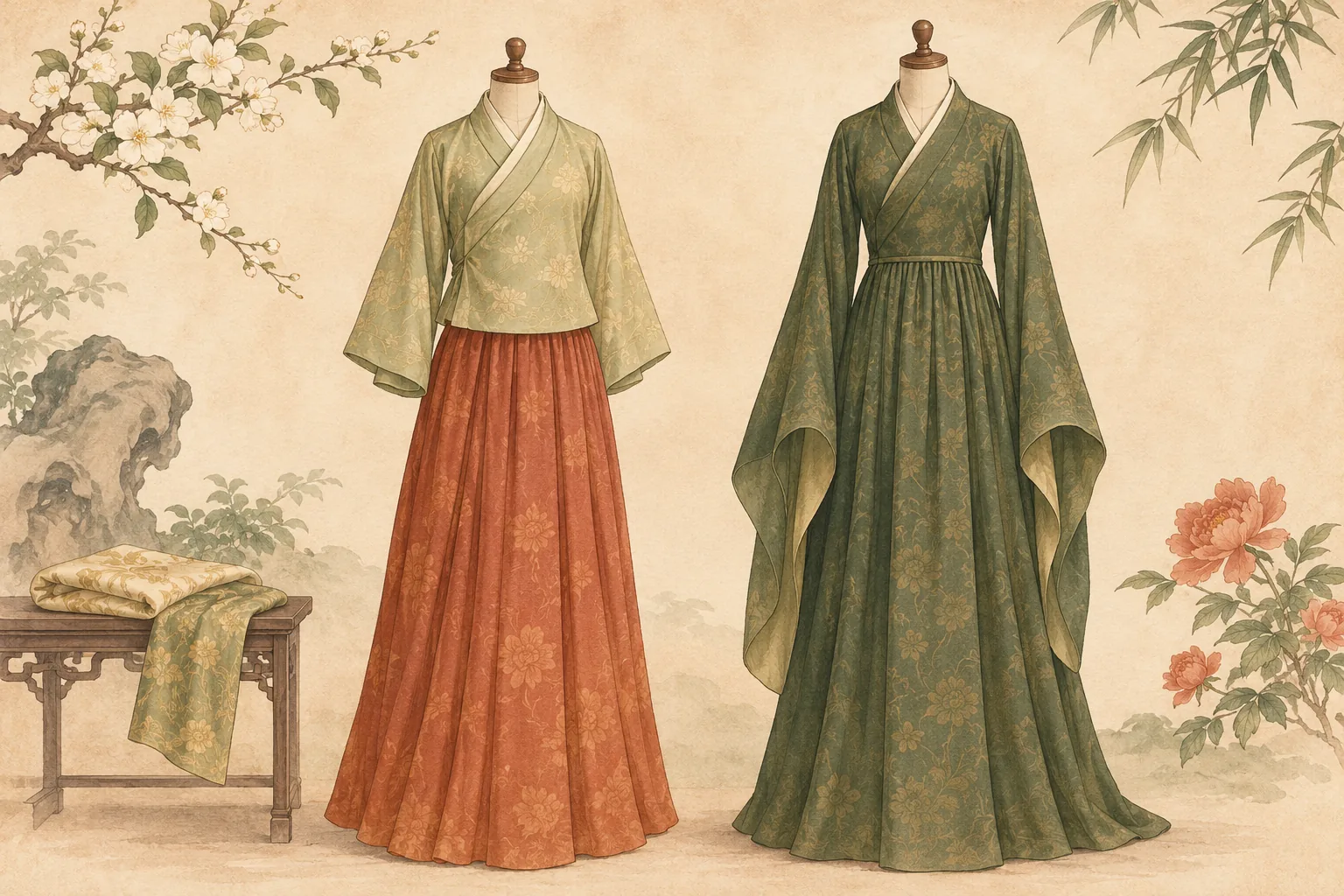
Ruqun and shenyi answer a construction question
A long skirt and a long robe can look similar in a small photograph. Follow the boundary between the upper and lower sections before judging the sleeve width or colour. The comparison below concerns these two arrangements, not a complete classification of Chinese historical clothing.
| Term | Useful distinction | What still needs checking |
|---|---|---|
| Ruqun 襦裙 | A short upper garment paired with a separate skirt; inspect their overlap. | Date, locality, sleeve shape and the height of the skirt. |
| Shenyi 深衣 | Upper and lower sections joined into a long garment in the museum definition used here. | The particular period, cut and evidence for the reconstruction. |
| Qixiong ruqun 齐胸襦裙 | A chest-high skirt description used in contemporary style naming. | Whether the named example is a modern garment, an interpretation or a dated historical depiction. |
The China National Silk Museum’s Han–Wei exhibition account defines shenyi through its joined construction and discusses short-top, long-skirt clothing among the changing styles of later periods. Its dress-history tour text describes short tops and long, high-set skirts in the Jin–Tang discussion. These are introductions to change, not proof that everyone in a dynasty wore the same arrangement.
Hanfu is broader than Han-dynasty dress
Read “Han” carefully. Han-dynasty is a period label; modern hanfu discussions cover clothing references from several periods. The Silk Museum’s 2022 exhibition moves from Han garments into Wei, Jin and Northern and Southern Dynasties material, while also acknowledging present-day enthusiasts. Historical evidence and current cultural practice are connected, but they are different things to describe.
For a useful label, add the period and source rather than stopping at “traditional Chinese dress.” A museum object, a modern reconstruction and a newly designed garment can share visual features without having the same evidential status. Calling a garment modern does not settle its cultural value; it tells the reader what kind of object they are looking at.
Ruqun: look for the top, skirt and their overlap
For a concrete Tang example, Cleveland’s Court Lady with High Chignon is dated about 700–750 and attributed to North China. The museum describes a V-neck blouse tucked into a floor-length skirt, a high waistband, narrow sleeves and a long stole. Those details let you move beyond a vague impression of flowing fabric and identify parts of the ensemble.
Compare those parts in order. Find the skirt’s top edge, follow the blouse toward it, then distinguish the stole from the sleeves. An accessory crossing the chest can conceal the overlap. If the photograph is unclear, leave the exact fastening undecided rather than inventing a construction from a painted line.
This object is painted earthenware associated with tomb furnishing, not a surviving cloth outfit. It records a particular courtly image; it does not provide a sewing pattern or establish how every Tang woman dressed. Its record also uses descriptive English terms, rather than certifying every modern retail label applied to a similar silhouette. Keep the object’s date and identity with the reference when sharing it.
Shenyi: a joined robe needs a dated explanation
The Silk Museum’s Han–Wei account identifies shenyi with upper and lower parts sewn together and distinguishes quju and zhiju forms. Its discussion places those terms within historical changes, including the increasing prominence of straight-front forms in the Eastern Han. This supports a construction comparison; it does not justify treating every cross-collared robe as the same garment.
When an image is labelled “quju shenyi,” ask what supports the label. Is it an excavated object, an interpretation based on an object, or a contemporary design? Save the underlying record and check whether its wording matches the caption. A long diagonal edge in a photograph may help describe the appearance, but a photograph alone can hide seams and the way fabric wraps around the body.
Avoid making gender, ceremony or dynasty an automatic consequence of the name. If the reference identifies a wearer or occasion, preserve it. If that information is missing, the responsible label is narrower: the visible form and the source’s attribution. Shenyi is a research topic in this guide; it is not currently a selectable HistoryOutfit outfit.
Keep Tang court imagery within its setting
A dynasty label is still too broad to explain every outfit. The Met’s study of Tang internationalism describes exchange through diplomacy, trade and travel, including elite interest in foreign clothing and riding styles. Tang visual culture was shaped by contact, rather than one isolated and unchanging dress system. A robe and a skirt ensemble can therefore belong in the same period without being interchangeable.
For your reference folder, keep three separate captions: what the historical record says, what a modern maker has interpreted, and what an AI image depicts. This makes comparison possible without requiring a fantasy image to prove a historical fact. It also prevents a crown, palace setting or dramatic sleeve from becoming evidence for an otherwise unsupported court title.
Use the terminology to describe an available portrait style
HistoryOutfit’s Tang-inspired collection currently contains Qixiong Ruqun, Ruqun, Tang-inspired Empress and Mianfu-inspired Emperor. The first two give you a practical top-and-skirt comparison: the Qixiong option has a chest-high coral skirt and ivory layers; the Ruqun option uses a peach skirt and pale-green upper layers. These names describe the offered artistic styles. They do not turn the examples into verified reconstructions.
Choose the visible outline you want before adding a garden or palace scene. Keep “Tang-inspired” in the caption, and inspect the generated garment edges, accessories and face before sharing. Studying shenyi here does not unlock a Han-dynasty wardrobe, and writing another period in a scene description does not add a new supported outfit. If your next task is making a portrait, the hanfu portrait guide explains the workflow and its limits. Use an authorized adult photo; generation requires sign-in and paid credits.
Compare the available portrait interpretations
These examples are existing HistoryOutfit test outputs made with synthetic adult source portraits. They illustrate the available creative styles; they are separate from the historical sources cited above. Clothing details and facial features can change in an AI result.
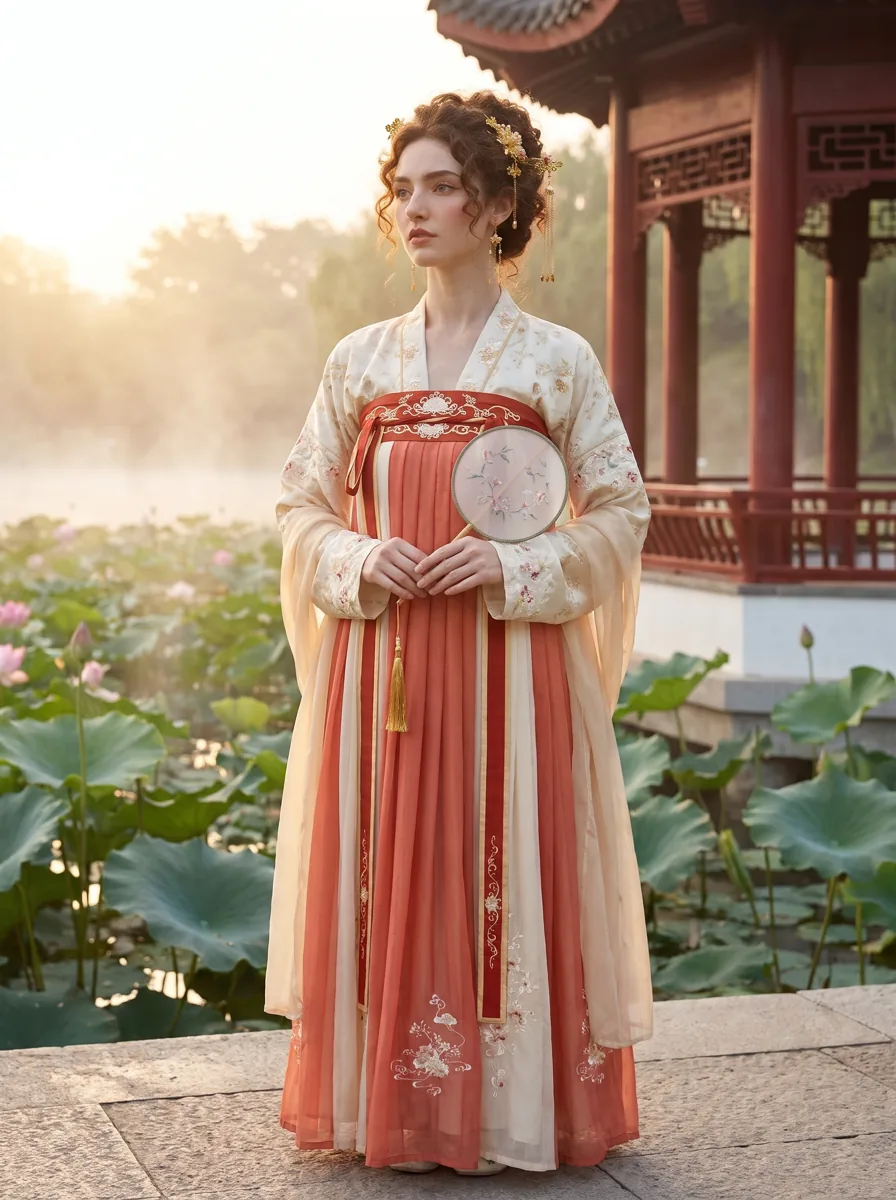
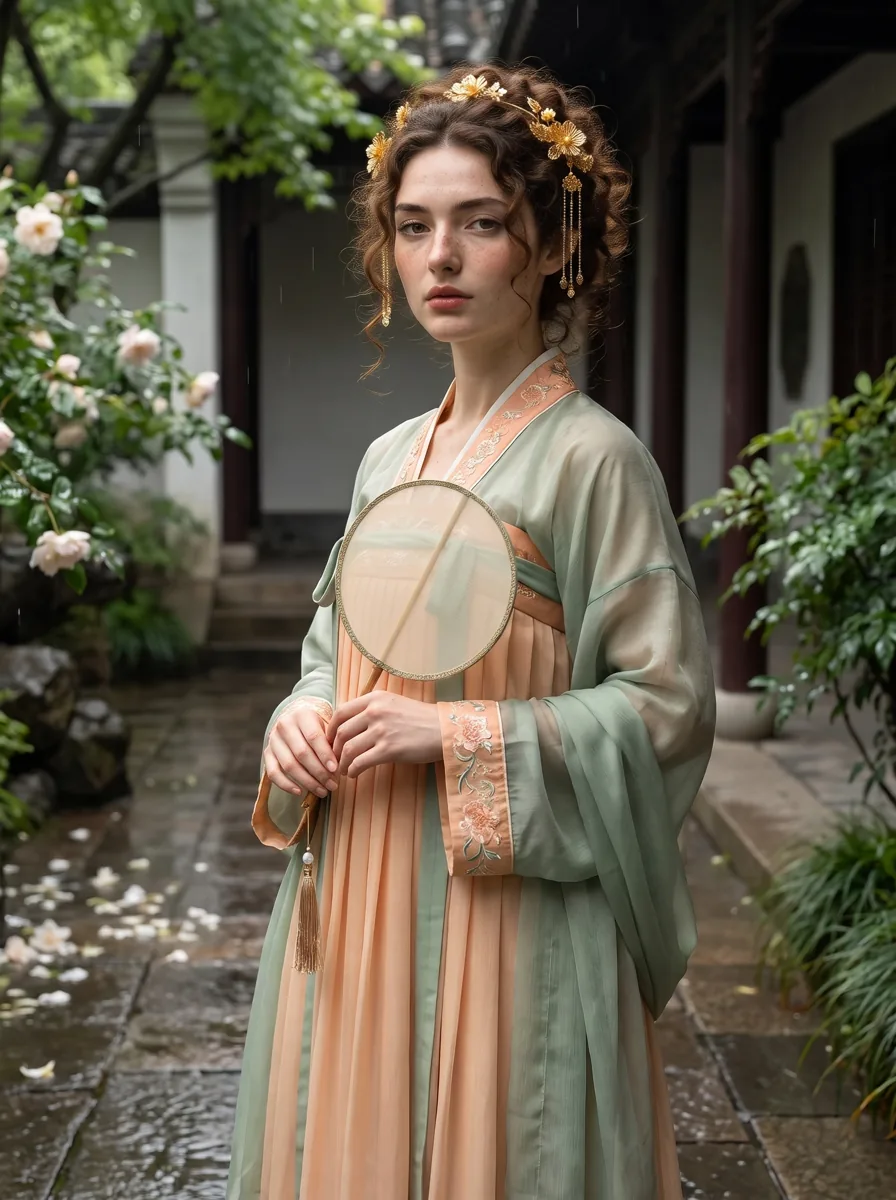
Choose an available outfit first, then use the scene field for pose, background and light. Review the face, hands and garment outline before sharing. The photo-to-portrait guide explains the workflow; see pricing and the photo-processing policy before generating.
Editorial note: this source-based introduction was researched with AI assistance and edited for the stated historical scope. Sources were reviewed on 15 November 2026. The cover is an AI-created editorial illustration, not a verified reconstruction; the product examples are documented AI outputs. HistoryOutfit publishes this guide and sells credits for its portrait service.