FASHION HISTORY · EGYPTIAN LINEN
Ancient Egyptian Clothing: Linen, Pleats and Social Context
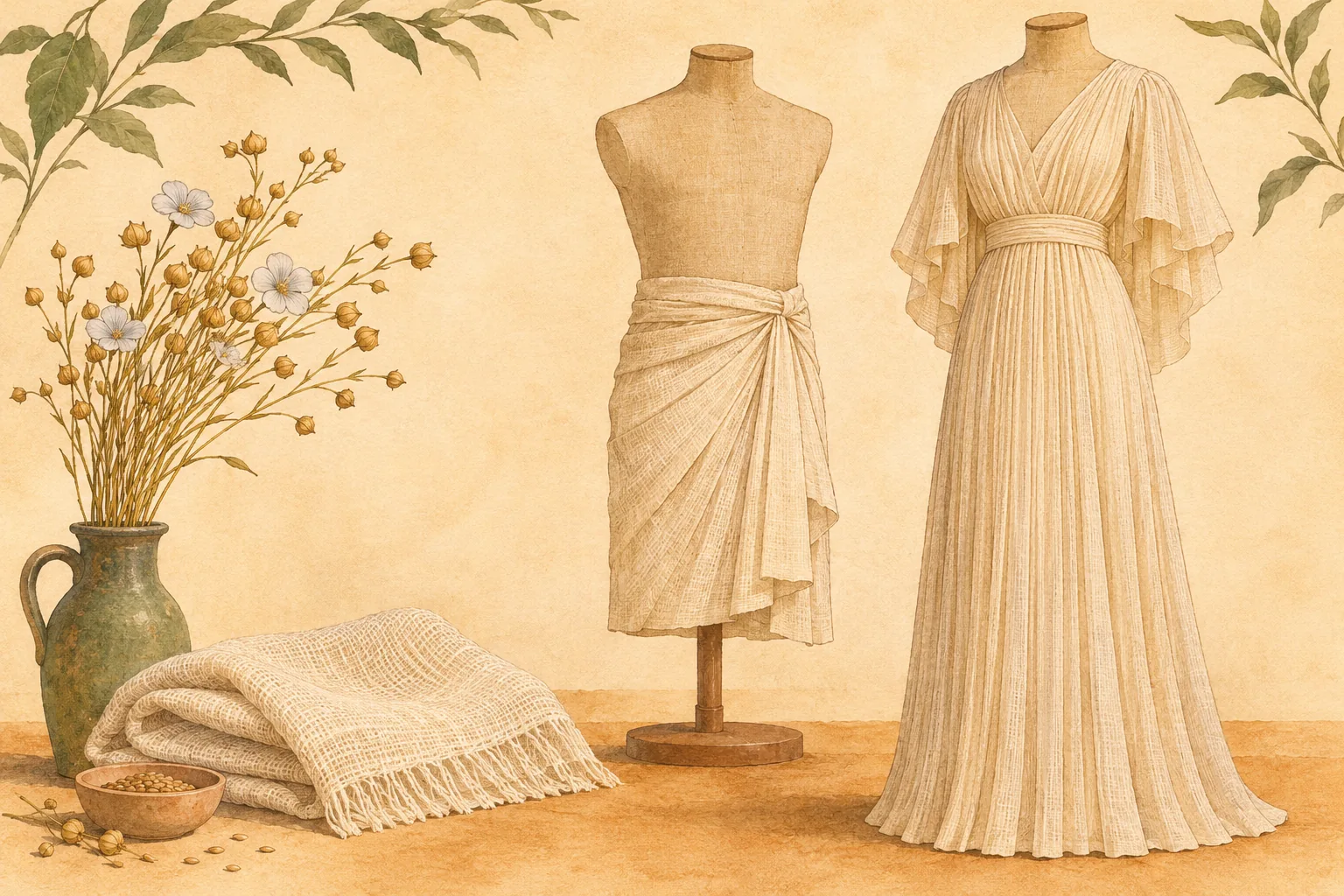
Compare the evidence before comparing the outfits
The Petrie Museum’s clothing overview describes linen as the predominant fabric and distinguishes Old and Middle Kingdom garments from the greater variety of New Kingdom pleated kilts, tunics, dresses and cloaks. That broad sequence is a starting point. A useful reference still needs a particular object and a clear statement of what it preserves.
| Evidence | Useful for | Keep uncertain |
|---|---|---|
| Surviving garment | Seams, edges, pleats, wear and repairs that remain. | Missing portions and the wearer’s identity. |
| Separate length of linen | Fibre, weave, fineness and finishing. | The cut of an outfit made from similar cloth. |
| Statue or painted figure | Represented clothing, role and visual conventions. | Details the artist omitted or idealized. |
| Modern or AI illustration | A visible interpretation to discuss and compare. | Historical construction unless independently supported. |
This is a reading method, not a ranking that makes one source answer every question. A royal statue can explain an emblem better than a plain linen fragment. The fragment may be better evidence for the fabric itself.
Linen quality matters as much as its colour
The Met’s Length of Very Sheer Linen Cloth, dated about 1491–1473 BCE, comes from the tomb of Hatnefer and Ramose. The museum connects the tomb’s linen with Hatshepsut’s storehouses and describes this exceptionally fine sheet as evidence for the prized quality called royal linen. It also records ancient laundering and repairs.
Its fineness helps explain how New Kingdom artists could depict clothing through which the body remained visible. The physical cloth supports that possibility. It does not tell us that every person wore transparent garments, or supply the cut of a complete pleated dress. An elite funerary gift is a particular context, even when it preserves something that had already been used.
For a visual brief, write down the material separately from ornament: fine or heavier-looking cloth; smooth or pleated surface; a wrapped or sewn form. A gold belt and broad collar may dominate a portrait, but they do not establish the quality, fibre or construction of the fabric underneath.
Pleats existed long before the New Kingdom
The Tarkhan dress is a useful check against treating pleating as a single-period marker. UCL’s report on its radiocarbon dating places the linen in the late fourth millennium BCE. The dress was made from three pieces of woven linen and retains knife pleats on its sleeves and bodice. Its hem is missing, so its full original length cannot be established.
The Petrie Museum’s object account explains that it was recognized during conservation of a bundle excavated from a tomb. Wear around the elbows and underarms supports use in life, while its exact burial purpose remains uncertain. Discovery context and original use are related questions, not interchangeable answers.
When comparing a pleated image with this dress, identify where the pleats actually survive. Pleating at a sleeve is evidence for that area of this object. It cannot authenticate a modern illustration’s full skirt, neckline and jewellery simply because the whole picture looks ancient.
Surviving dresses complicate the familiar sheath silhouette
UCL’s Digital Egypt dress catalogue compares two Fifth Dynasty dresses from Deshasheh, around 2400 BCE, with the strap-supported version more often shown in art. The surviving dresses have sleeves and V-shaped neck openings. The catalogue also describes rectangular bag tunics used by men and women from the New Kingdom, with variation in sleeves and neck openings among surviving examples.
The same page makes a helpful distinction between deliberate pleating and storage folds. Linen folded into chests would acquire creases, although these were seldom shown in contemporary art. Parallel lines in a modern image should therefore prompt a question about what they represent, rather than an automatic identification.
For a clothing study, compare the image and object side by side without forcing them into one pattern. Note “sleeves preserved in the garment” and “straps represented in the image.” A difference can teach you more than a neat reconstruction that silently removes the disagreement.
Royal regalia describes a role, not everyone’s wardrobe
The Met’s Seated Statue of Hatshepsut, about 1473–1458 BCE, depicts the ruler in a nemes headcloth and shendyt kilt. The museum identifies them as ceremonial kingly attire and discusses how this particular statue combines those garments with a feminine representation. Surviving paint indicates alternating blue and yellow on the headcloth’s pleats.
This example asks you to distinguish the represented office from assumptions about gender or everyday dress. It is evidence for a particular presentation of kingship. It does not show what all Egyptian men wore, nor a standard outfit for all women. Even the colours belong to this object’s surviving evidence; an arbitrary striped head covering does not become a replica of it.
A broad collar needs its own evidence
UCL’s New Kingdom jewellery overview includes broad collars, bracelets and pectorals, alongside newer forms of adornment. It distinguishes depictions in art from objects and identifies reconstructed or modern stringing in some examples. Save those qualifications with the reference. A museum display’s arrangement may include conservation decisions, while an AI collar may invent the bead order, fastening and materials entirely.
Build a reference that keeps its date and limits
Before choosing a look, make a compact note with four fields: object and date; what survives; what the institution infers; and what your illustration adds. For the Tarkhan dress, the missing hem belongs in the second field. For Hatshepsut, the ceremonial role belongs in the third. An invented belt or setting belongs in the fourth. This keeps a creative image from quietly becoming a historical claim.
HistoryOutfit’s Egyptian collection has two New Kingdom-inspired artistic options: Egyptian Pleated Gown and Egyptian Pharaoh. The gown combines ivory pleats with a broad collar and gold-toned ornament; the royal look uses a striped nemes-style headcloth and kilt-like layers. The product does not offer every dated garment discussed here.
Choose one of those available directions for a digital portrait, then check the face, hands, collar, headcloth and clothing outline in the result. Describe it as Egyptian-inspired AI artwork. If your task is a sewing pattern, classroom reconstruction or identification of a named ruler’s costume, return to the object records and their uncertainties. The product examples below show creative interpretations, rather than archaeological evidence.
Compare the available portrait interpretations
These examples are existing HistoryOutfit test outputs made with synthetic adult source portraits. They illustrate the available creative styles; they are separate from the historical sources cited above. Clothing details and facial features can change in an AI result.
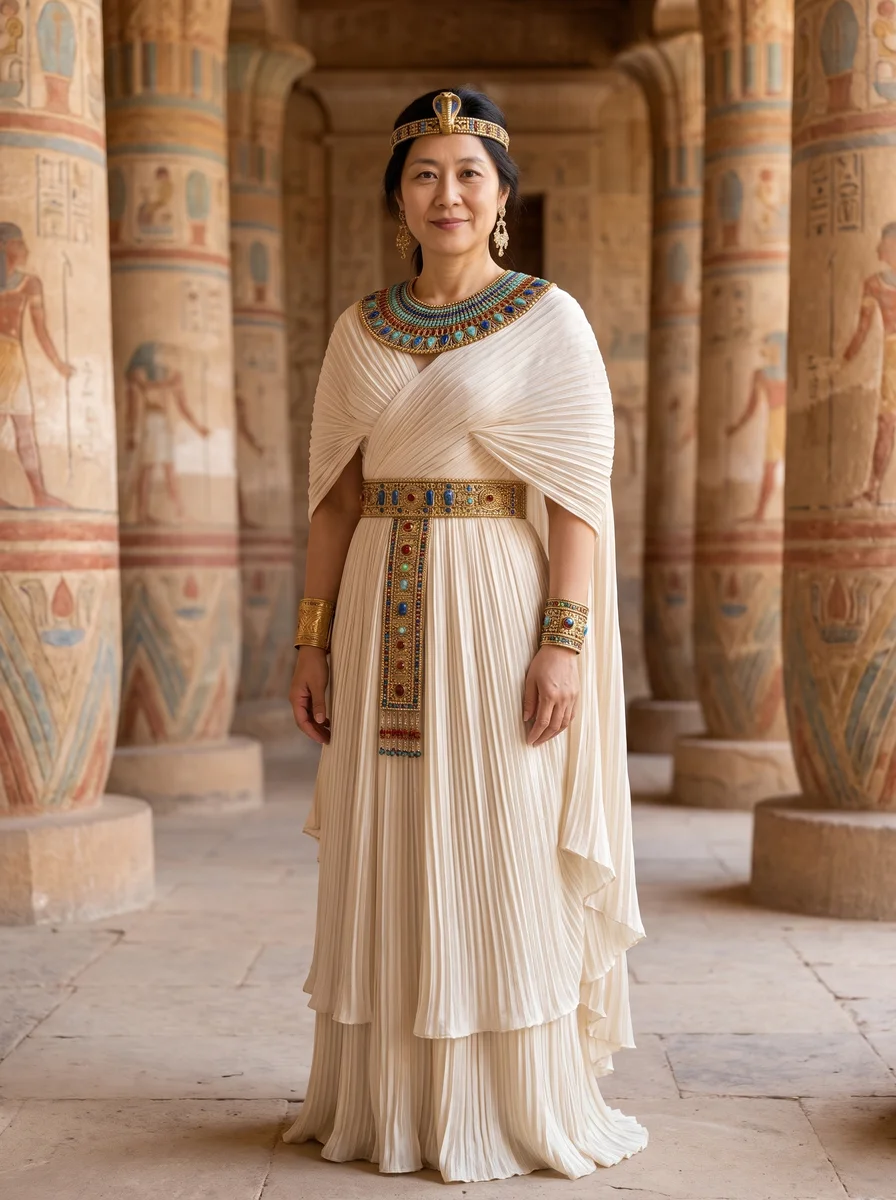
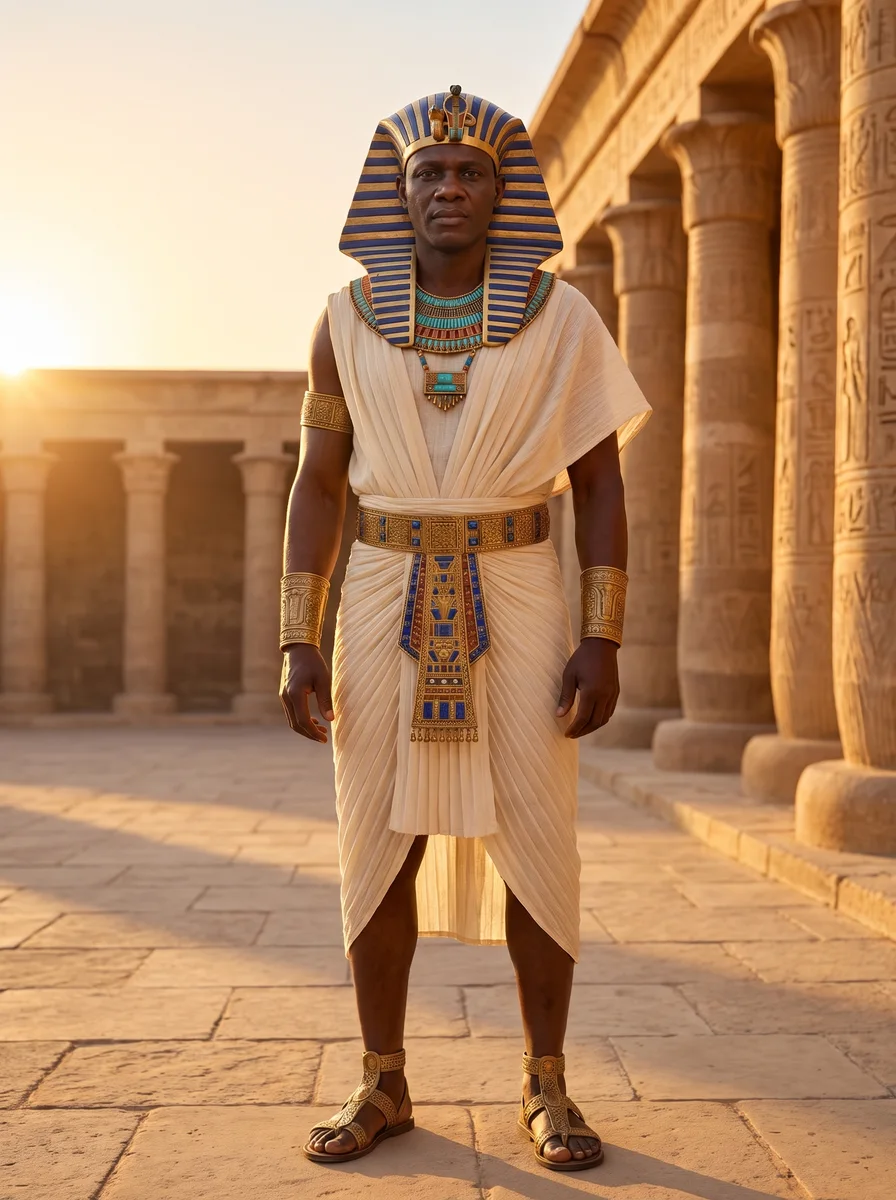
Choose an available outfit first, then use the scene field for pose, background and light. Review the face, hands and garment outline before sharing. The photo-to-portrait guide explains the workflow; see pricing and the photo-processing policy before generating.
Editorial note: this source-based introduction was researched with AI assistance and edited for the stated historical scope. Sources were reviewed on 15 November 2026. The cover is an AI-created editorial illustration, not a verified reconstruction; the product examples are documented AI outputs. HistoryOutfit publishes this guide and sells credits for its portrait service.